As we step into 2026, the infrastructure and utilities sector is entering one of its most transformative periods in decades. Aging systems, rapid population growth, and rising expectations for reliability are reshaping what communities need and what the industry must deliver. At the same time, advancements in technology, shifting regulatory pressures, and a competitive, evolving workforce are accelerating change at every level. These forces aren’t just trends; they’re drivers that define how local governments plan, how contractors operate, and how industry partners like RCM Utilities collaborate to meet tomorrow’s demands. Understanding where the sector is headed isn’t optional; it’s essential for anyone responsible for building, maintaining, or investing in the systems that keep our communities running. And to fully grasp what’s driving these shifts, we must first look at the broader Economic & Market Outlook setting the stage for 2026.
Economic & Market Outlook
The economic landscape heading into 2026 is shaped by steady population growth and continued community expansion, driving significant demand for water, wastewater, stormwater, and road infrastructure. According to the U.S. Environmental Protection Agency, there are approximately 17,500 publicly owned wastewater treatment works in the U.S. serving roughly 270 million people about 80 % of the nation’s population.
Municipalities are under increasing pressure to expand capital improvement plans that keep pace with community needs while remaining financially responsible. After several years of sharp volatility, inflation is expected to stabilize, offering some relief in forecasting but materials, labor, and equipment costs are still projected to trend upward, requiring more strategic budgeting and procurement. At the same time, heightened expectations for transparency and public accountability are transforming how infrastructure projects are tracked and communicated. New reporting mandates are pushing agencies and contractors to strengthen compliance documentation, improve project visibility, and engage the public more proactively than ever before. As these forces continue to shape the market, several emerging challenges will require even closer attention in the year ahead.
Across the infrastructure and utilities sector, several emerging challenges are shaping how projects progress. Funding gaps remain one of the most significant obstacles, with general revenue dollars stretched across competing priorities and an ever-growing backlog of deferred maintenance demanding attention. In fact, the national backlog of deferred maintenance in U.S. infrastructure is estimated at roughly $1 trillion. At the same time, delays in materials and equipment continue to create uncertainty in project planning, as supply chain fluctuations and extended lead times on critical components make scheduling and budgeting more complex. Together, these challenges underscore the need for adaptable strategies, proactive communication, and stronger long-term planning across the industry. Yet within these challenges lie meaningful opportunities that will define the sector’s direction in 2026 and beyond.
Infrastructure Demand
In fast-growing regions, new development is driving an unprecedented wave of capital needs on top of what’s already required for aging systems. Nationally, additional water and wastewater capital investment will be needed over the next two decades to keep pace with growth and regulatory requirements, and some estimates place the broader U.S. infrastructure funding gap at over $2.6 trillion—a gap local governments are being forced to address project by project.
In addition to managing growth, deferred maintenance on infrastructure isn’t a small line item—it’s a growing crisis. In the U.S., estimates put the backlog of needed road and bridge repairs alone in the hundreds of billions of dollars, and the overall national deferred maintenance gap across infrastructure is often cited at around $1 trillion. That means many communities are operating critical assets well past their intended service life, increasing lifecycle costs and the likelihood of failures that are far more expensive than proactive repair and maintenance.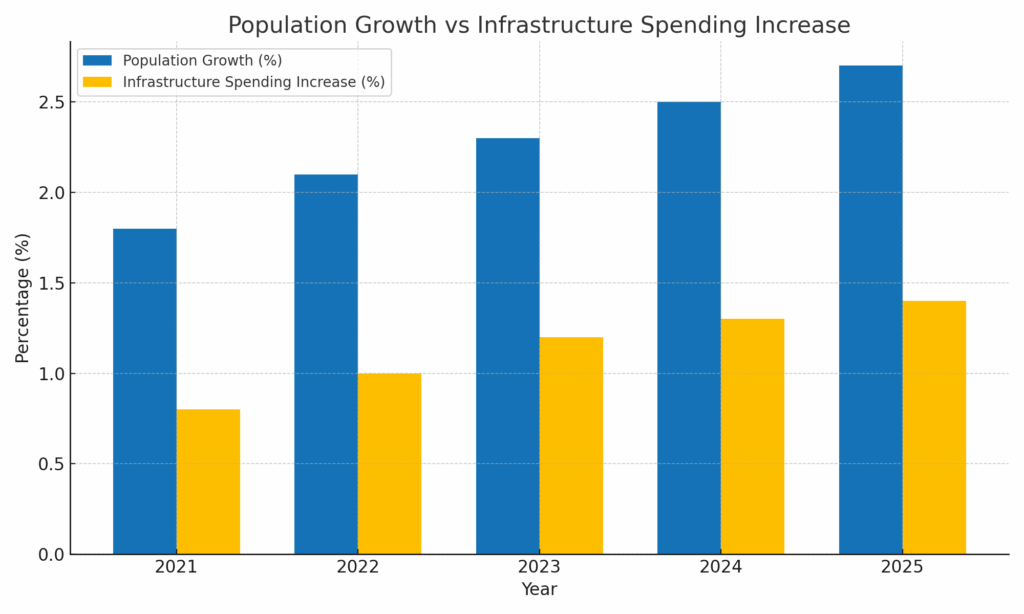
Challenges to Watch
Across the infrastructure and utilities sector, several emerging challenges are shaping how projects progress. Funding gaps remain one of the most significant obstacles, with general revenue dollars stretched across competing priorities and an ever-growing backlog of deferred maintenance demanding attention. In fact, the national backlog of deferred maintenance in U.S. infrastructure is estimated at roughly $1 trillion. At the same time, delays in materials and equipment continue to create uncertainty in project planning, as supply chain fluctuations and extended lead times on critical components make scheduling and budgeting more complex. Together, these challenges underscore the need for adaptable strategies, proactive communication, and stronger long-term planning across the industry. Yet within these challenges lie meaningful opportunities that will define the sector’s direction in 2026 and beyond.
Where Municipalities Can Gain Ground in 2026 with Partners like RCM Utilities
As the infrastructure and utilities landscape evolves, municipalities and industry partners have a unique opportunity to strengthen their positions by embracing proactive planning. Investing in reliable partners and a skilled workforce will be essential, particularly as aging infrastructure from lift stations and maintenance holes to critical water and wastewater pipelines require systematic rehabilitation and replacement. RCM Utilities provides full turnkey water and wastewater infrastructure services for new construction, from lift stations and force mains to critical pipelines and system tie-ins, so growing communities can keep pace with demand without sacrificing quality or reliability.
Beyond capital projects, we help agencies stretch every dollar by focusing on smart maintenance and life extension of existing assets. Our team delivers cost-effective coating programs, smoke testing, cleaning, and rehabilitation services that identify issues early, reduce inflow and infiltration, and extend the lifespan of aging infrastructure — all while minimizing service disruptions for customers.
Additionally, the rising frequency of extreme weather events is increasing demand for storm damage response, flood cleanup, and system restoration services, making resiliency a major driver of opportunity. When urgency strikes, RCM Utilities is there with 24/7 emergency response for breaks, backups, storm damage, and system failures. And through piggyback procurement options and long-term service agreements, we help our partners move faster, avoid lengthy bid cycles, and maintain operational stability with a trusted, proven team.
The path ahead for the infrastructure and utilities sector is undeniably complex, but equally rich in possibilities. As communities continue to grow and expectations rise, it also presents a catalyst for innovation, modernization, and more intelligent long-term decision-making. By leveraging technology, strengthening collaboration, and prioritizing sustainable, scalable solutions, local governments and industry partners can turn today’s pressures into tomorrow’s progress. Whether it’s lift station rehabilitation, maintenance hole coating programs, storm response, or long-term utility partnerships, the RCM Utility team is ready to help you move forward with confidence. If you’re planning for 2026 and looking for a reliable partner to support your infrastructure needs, contact our team today to get started, Home | rcmutilities